DanCuProxy / Case study
DanCuProxy Platform
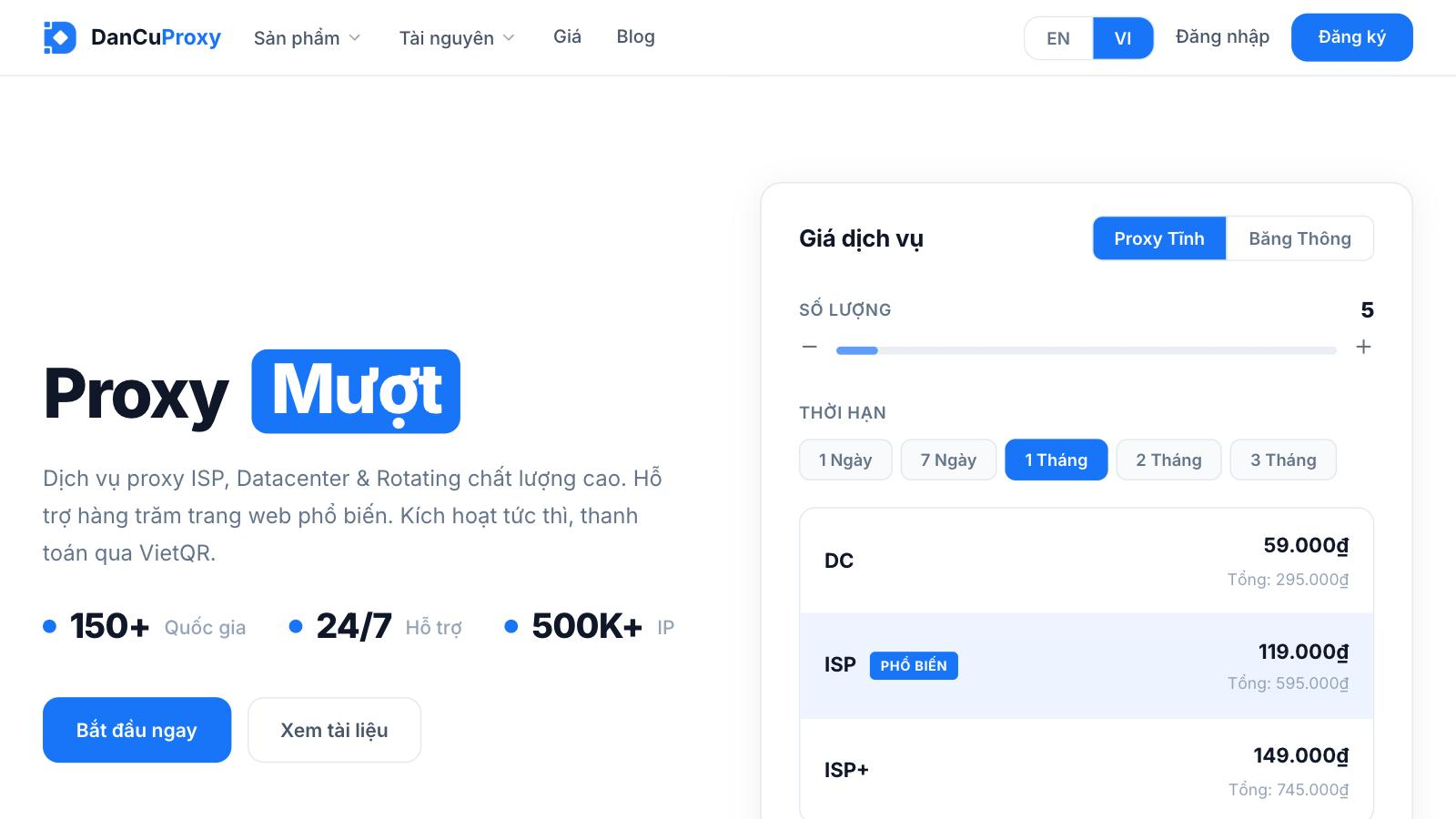
DanCuProxy sells ISP, datacenter and rotating proxies to Vietnamese users who need clean IPs at a local price. Workless helped turn a complicated infrastructure product into a service people can buy, pay for and start using in seconds.
- Project
- DanCuProxy / dancuproxy.com
- Role
- Concept, information architecture, product design, build
- Product
- Proxy marketplace, customer dashboard and admin system
- Status
- Live
The problem
Proxy services are easy to sell and hard to trust. Many Vietnamese users buy proxies to manage multiple accounts, run e-commerce operations and scrape data. They are used to unclear pricing, slow manual delivery, bank-transfer chasing, and IPs that arrive already banned.
DanCuProxy set out to remove each of those frictions: a fair price, a clean IP, and a purchase that finishes before the customer has time to doubt it.
- Built for Vietnamese operatorsFreelancers, small teams and solo operators who run many accounts and care more about price and uptime than brand names.
- Local payments, global targetsCustomers pay in dong through a bank QR code, but their proxies need to sit in the US, Europe and Asia.
- Trust is the productA proxy is invisible when it works. Customers judge the service by speed, location accuracy and how quickly a dead IP is replaced.
Clarity before code
Workless starts with one belief: the more time spent making requirements as clear as a white paper, the less time is needed to code. For DanCuProxy, that meant settling three questions before designing a single screen.
- CatalogHow do you explain static, rotating and bandwidth-based proxies so a first-time buyer picks the right one?
- FlowWhat is the shortest honest path from “I need a proxy” to “I’m using it”?
- TrustWhat can the product prove, rather than promise, about quality?
From infrastructure to product
The catalog is organized around how customers buy, not how the network is built.
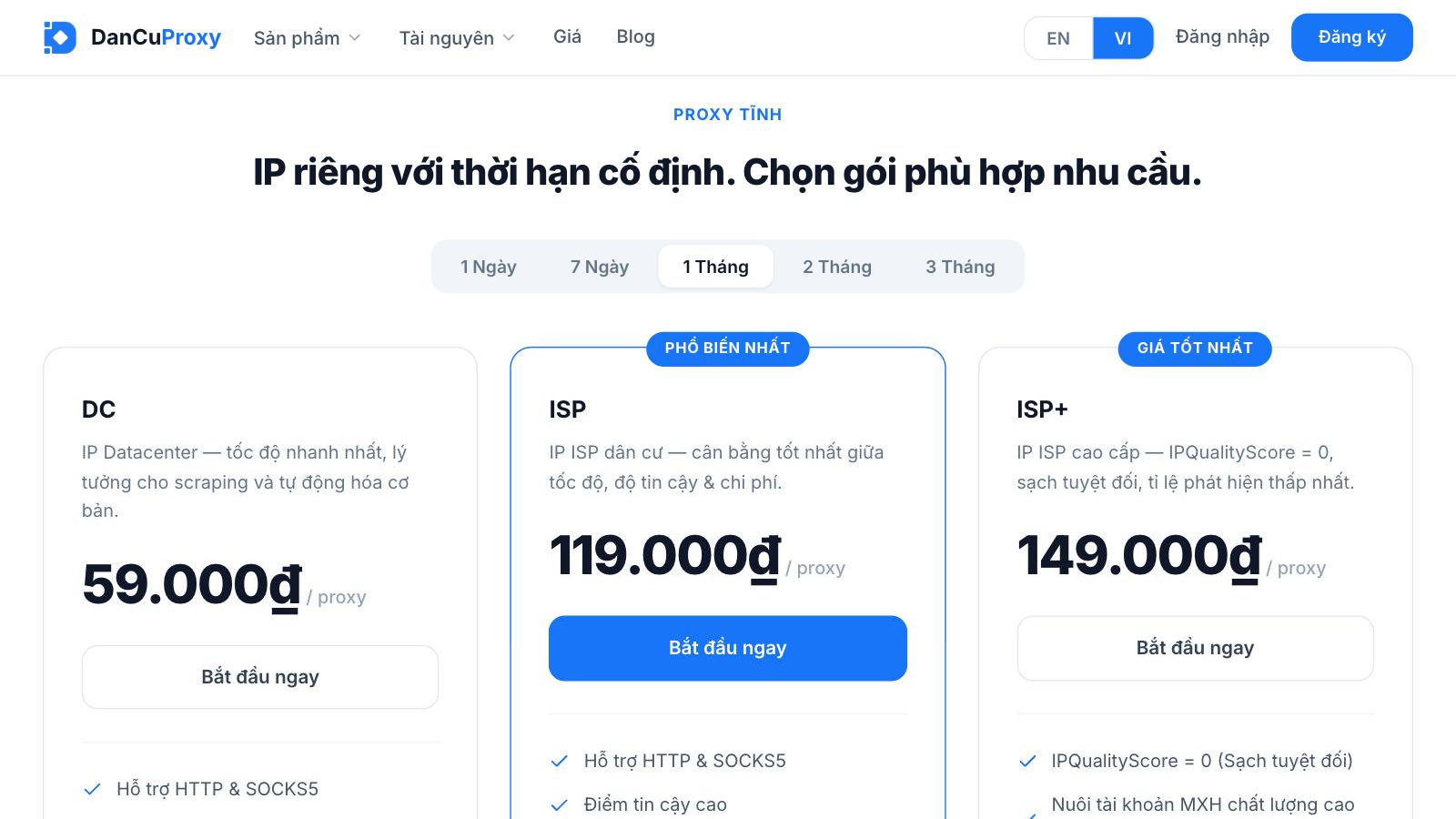
- Static proxiesDedicated DC, ISP and ISP+ addresses, sold by quantity and duration from one day to three months, starting at 59,000₫. HTTP and SOCKS5 run on the same port, so switching protocols needs no reconfiguration.
- Rotating proxiesResidential, datacenter and ISP pools with sticky sessions and automatic rotation.
- BandwidthPay-per-GB plans that never expire, for people who would rather buy traffic than IPs.
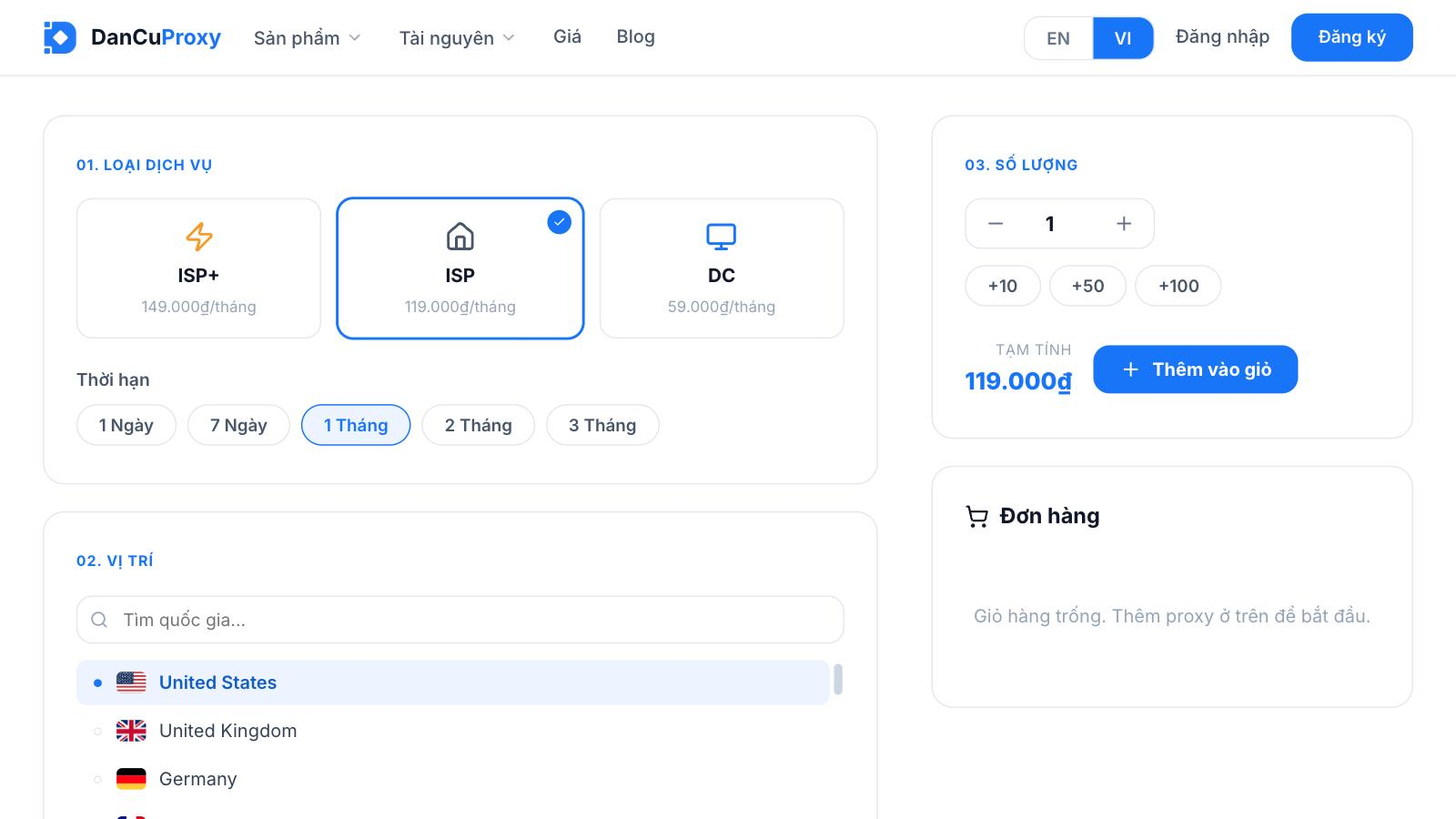
- PricingOne calculator for quantity and duration, with the total shown before checkout and the most popular tier flagged.
Built as a system
The website is the storefront. The product is everything behind it. Four connected surfaces carry the whole business.
- LandingA direct entry point with pricing on the first screen instead of behind a sales form.
- Customer dashboardOne place to manage proxies, balance and payments, with username/password or IP-whitelist authentication set per proxy.
- Instant activationCustomers top up by VietQR, the balance is credited automatically within seconds, and proxies are delivered the moment the order is placed. No human is in the loop.
- Admin systemA separate back office where the owner manages users, IP stock, bandwidth packages, roles, permissions and the blog, and reviews an activity log, without touching code or a deployment pipeline.
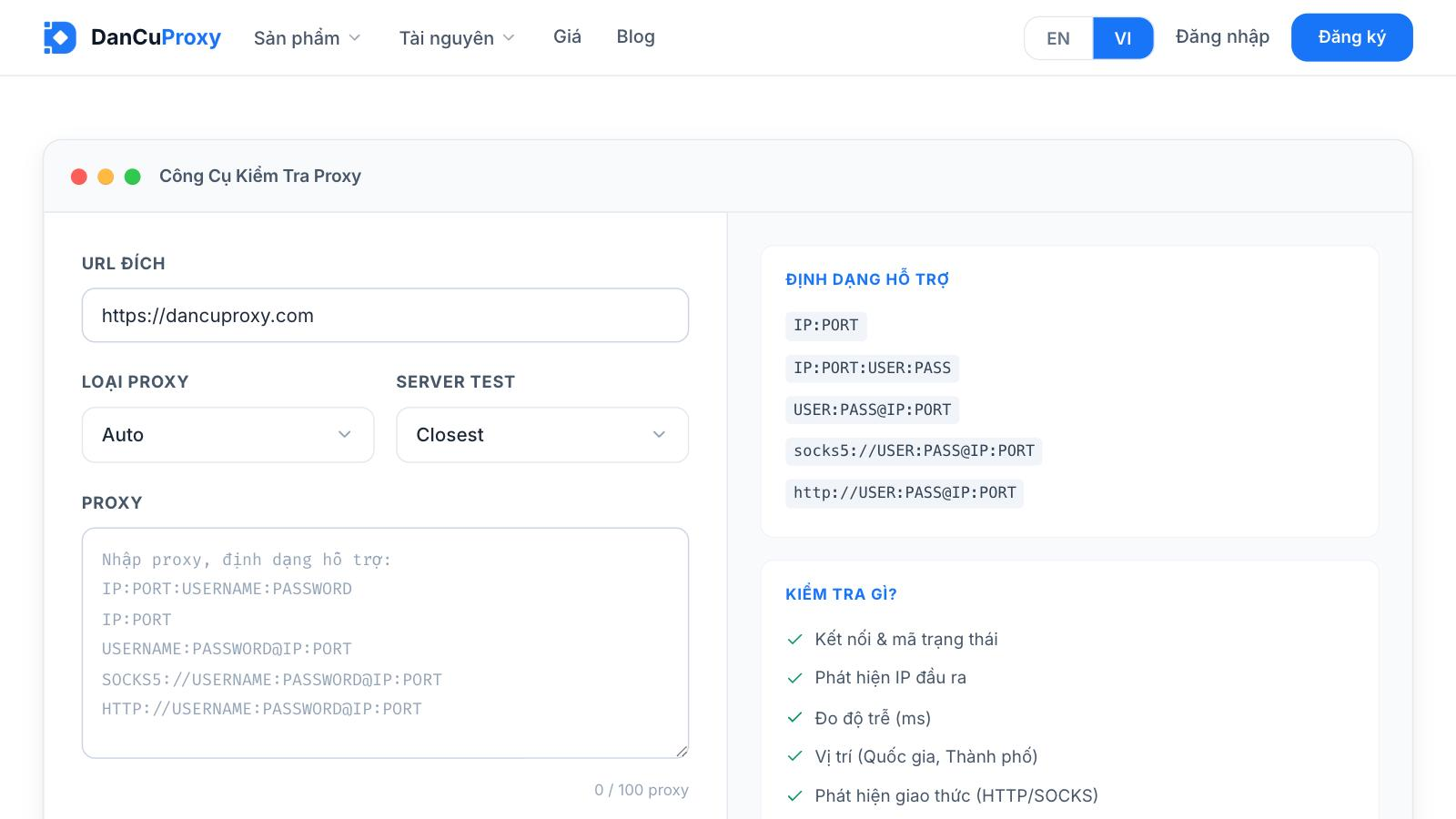
Around these sit a free Proxy Checker that tests speed, anonymity and location, plus docs, an FAQ, a community channel and a public status page, in Vietnamese and English.
The result
DanCuProxy is live at dancuproxy.com, offering proxies in 74 countries across six continents, with an IP pool of over 10 million addresses and locations verified against Cloudflare Radar.
The live numbers show the system working:
- registered users
- 751
- active static proxies
- 213
- deposits this month, all processed and delivered automatically
- 1,009
- revenue in the first 17 days of October, about 90% of September’s full month
- 21.3M₫
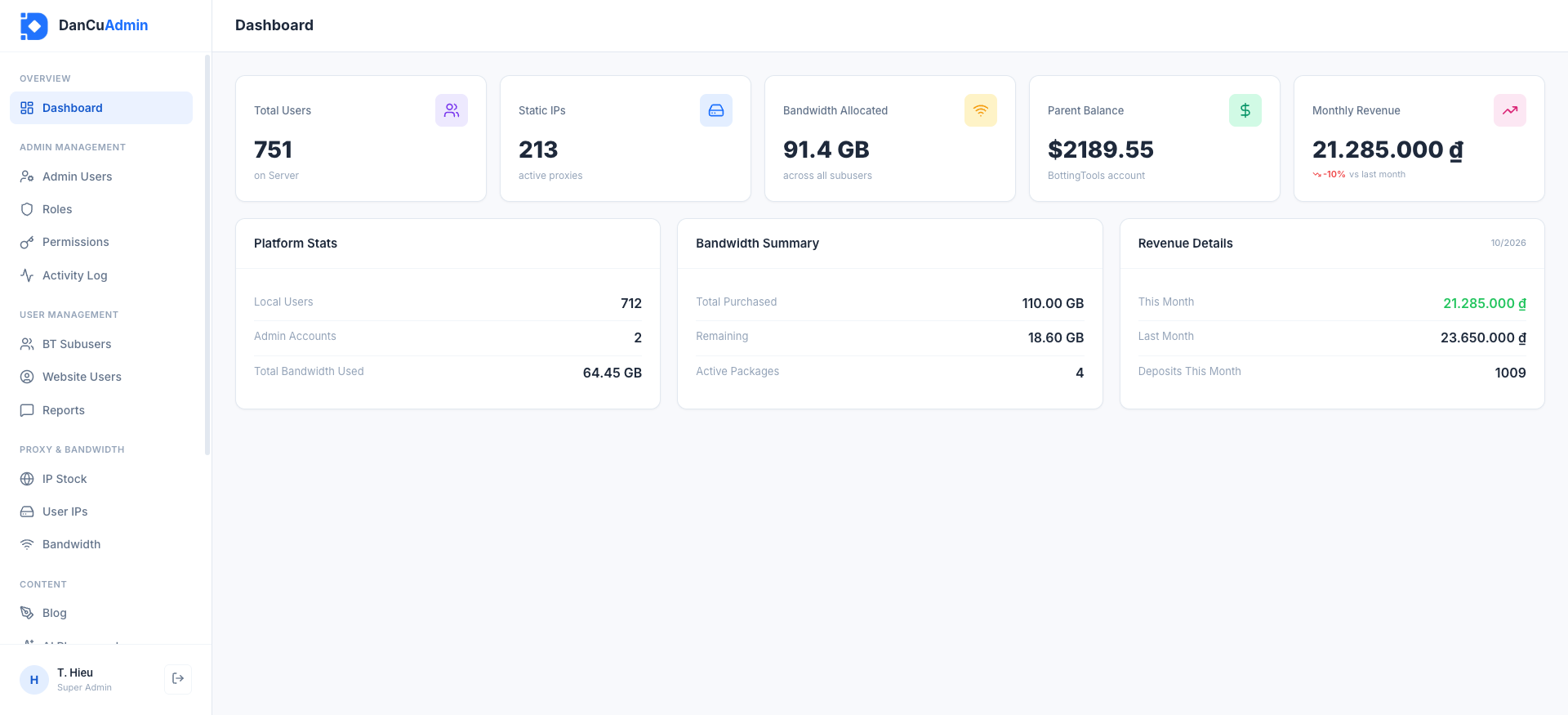
A customer can create an account in about 30 seconds, top up by QR code and receive working proxies without contacting anyone. The owner can run the business from one screen. The product practices the same automation it sells.
How it came together
- RequirementsSettled early: who buys, how they pay, and what “clean” has to mean.
- ArchitectureThe catalog and checkout were designed around the customer’s decision, not the network’s topology.
- ExecutionWith the flow clear before design started, the build could focus on automation: payment, delivery and management without manual steps.