Dream Palace Hotel / Case study
Dream Palace Hotel
A demo of how Workless designs a complete hotel platform: a public website where each property keeps its own character, and a management system that runs rooms, guests and staff for both.
- Project
- Dream Palace Hotel / dreampalace.asia
- Role
- Concept, information architecture, content strategy, design, build
- Product
- Multi-property hotel website, booking flow and hotel management platform
- Languages
- Vietnamese, English, Chinese
- Status
- Demo, shared with the client’s permission. Booking runs as a preview with no real reservations or payments.
The problem
A hotel website usually sells rooms. A hotel business also has to run them: who is staying, which room is ready, who is working which shift. And a brand with two very different properties has to do both without flattening either.
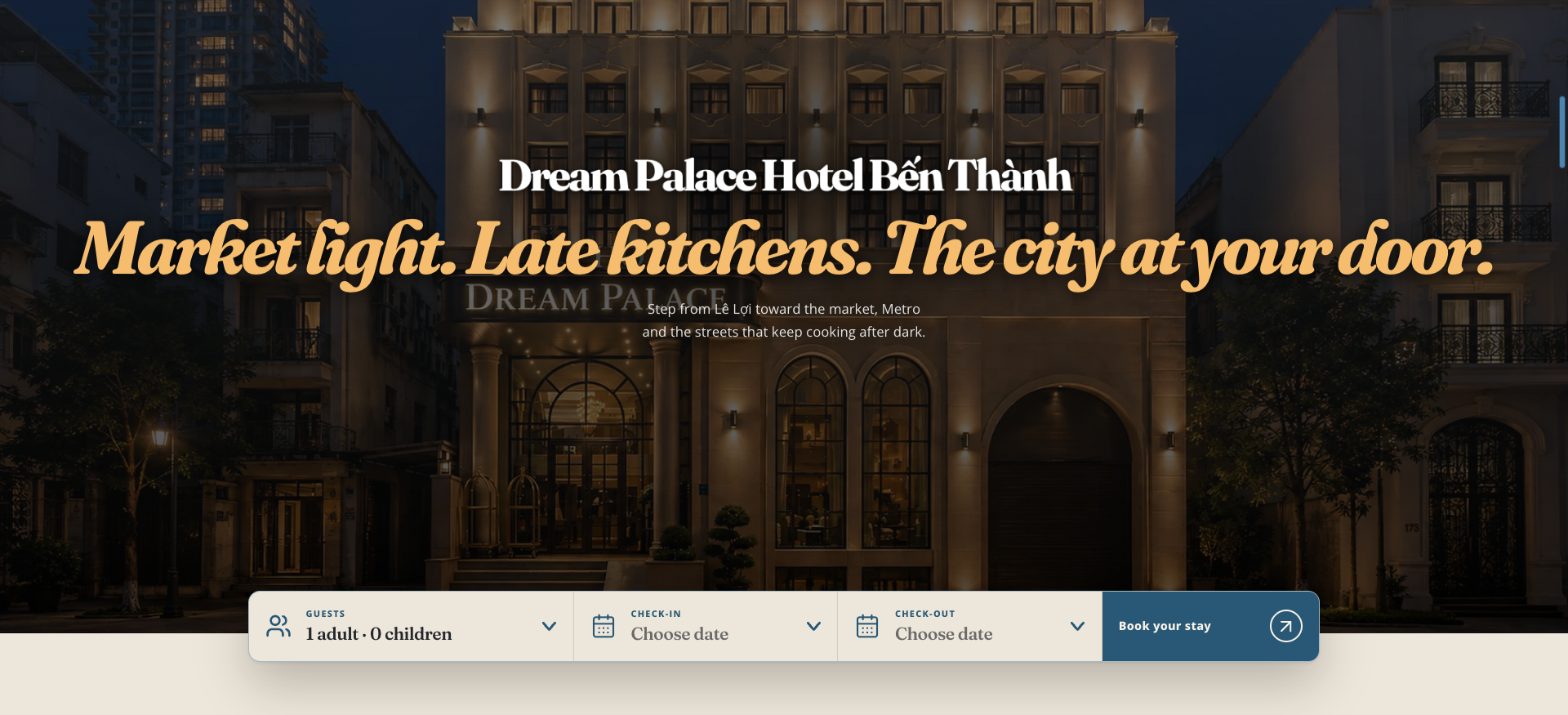
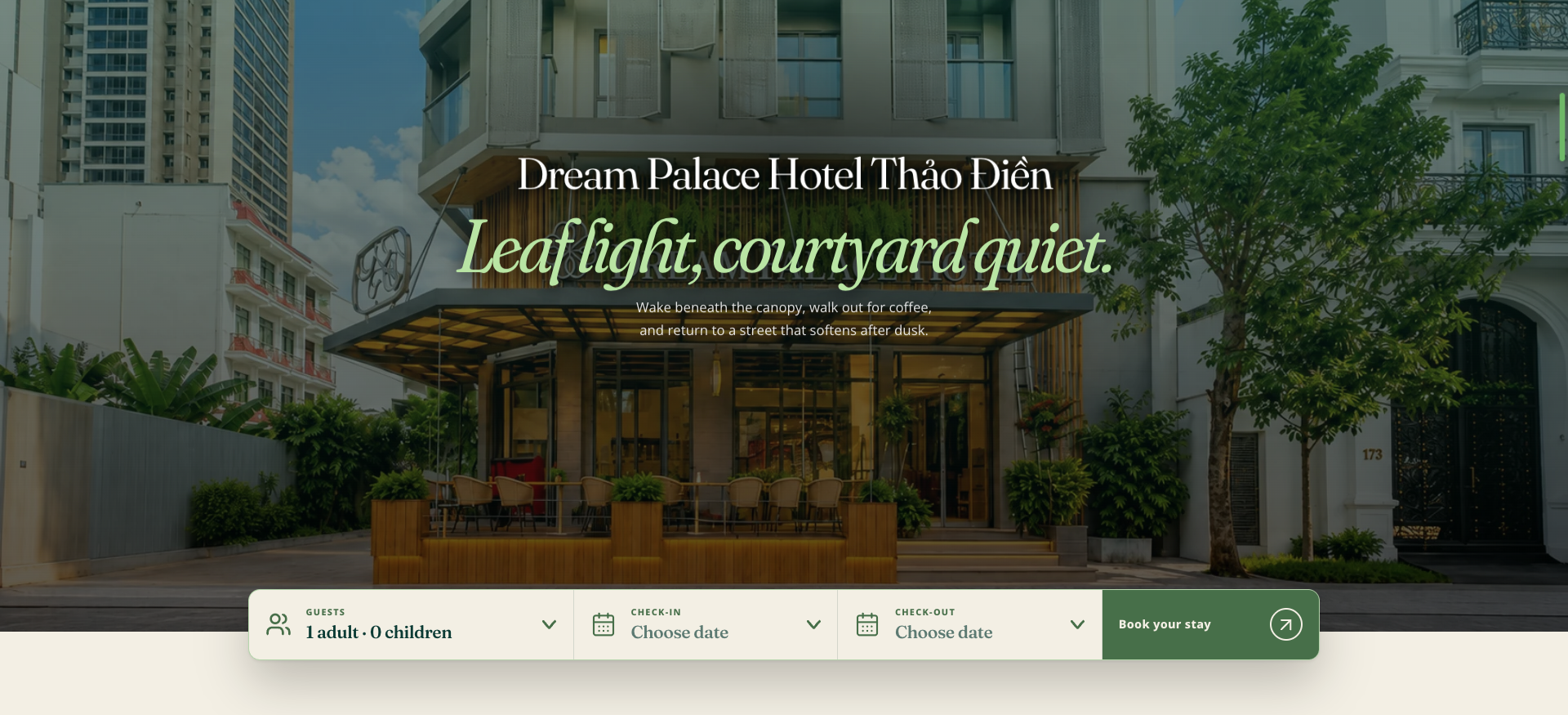
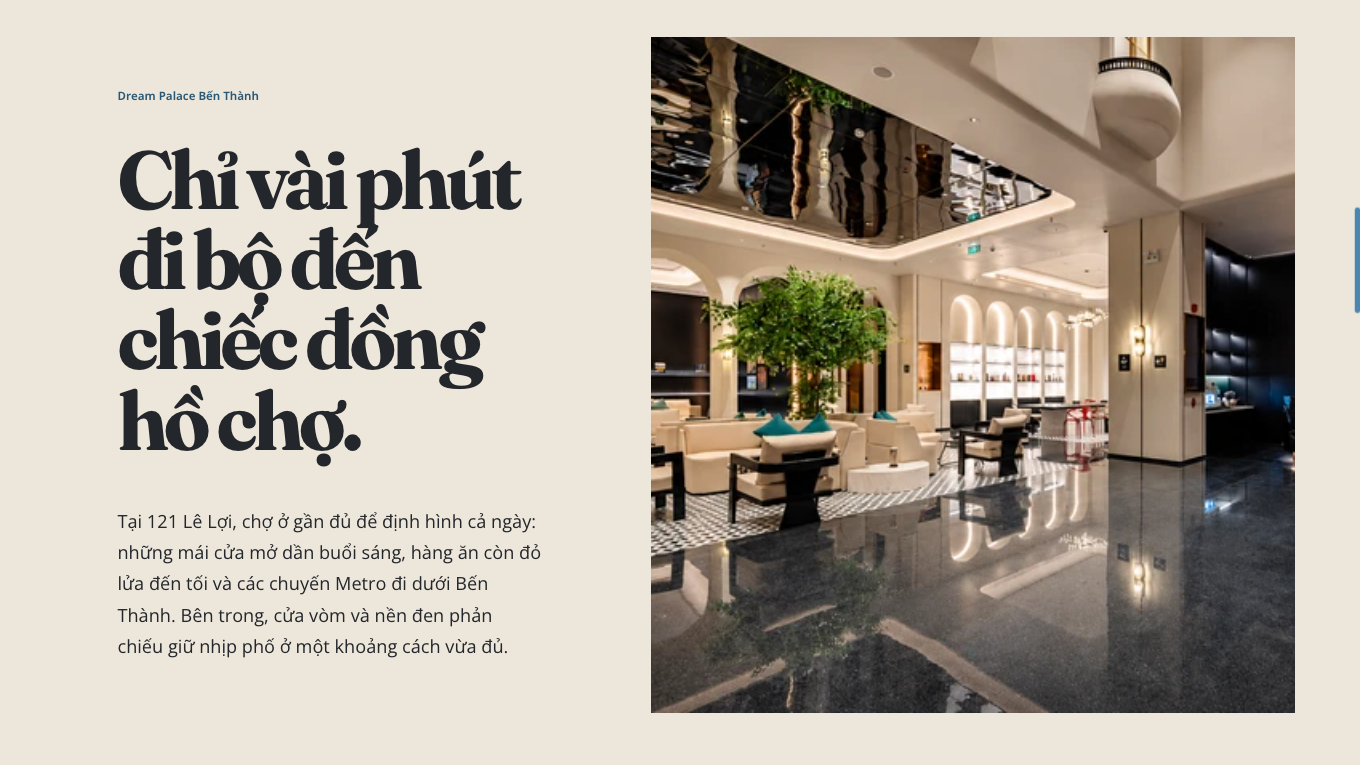
In this demo, Thảo Điền is green, slow and residential: a courtyard canopy, street cafés and rooms closer to a small apartment. Bến Thành is the opposite: an arched lobby, dark reflective floors, a market clock around the corner and a city that stays awake until midnight. A single generic template, and a single generic back office, would fit neither.
- Guests arrive with a choice to makeBefore anything else, a visitor decides which part of the city they want to stay in.
- Neighborhood is the productEach hotel is defined by what is outside the door: the street, the food, the Metro, the quiet or the noise.
- Two properties, one teamRooms, guests and staff belong to different hotels but are managed by the same people. The system has to keep them apart without making the team work twice.
- International guests, local detailVisitors read in Vietnamese, English and Chinese and need the same clarity in each.
Clarity before code
Workless starts with one belief: the more time spent making requirements as clear as a white paper, the less time is needed to code. Before designing a page or a screen, four questions had to be answered.
- ChoiceHow does a guest choose between two hotels in seconds, without reading a comparison table?
- IdentityHow do two properties share one brand without sounding the same?
- ActionWhat is the shortest path from “I like this place” to “I’d like to stay here”?
- OperationsWhat does the team need to see, and change, every day to run both hotels from one place?
From brand to experience
The answer was to treat each hotel as its own world and let the entry page do one job: ask the guest to choose a rhythm for the city.
- The chooserThe home page offers two doors, each with a one-line promise: quiet, green, close but private and every destination close by. Nothing else competes for attention.
- One structure, two voicesEach hotel follows the same path of place, a day there, rooms and location, so guests learn the pattern once. Each has its own logo, imagery and tone: Thảo Điền is told through morning light and café walks, Bến Thành through market evenings and late-night kitchens.
- A day, not a feature listA timeline from first coffee to the last bowl of noodles replaces the usual amenities list and shows what staying in each neighborhood is like.
- Rooms grouped by how people stayThảo Điền is organized around living: a one-bedroom residence, king rooms, a work studio and a full residence with a kitchen for long stays. Bến Thành is organized around the city: king and twin rooms, a reading salon, a 14-seat garden meeting room, a gym and a guest laundry.
- Location as distance, not adjectivesWalking times and distances to the Metro, the river, the market and the mall let guests judge the location for themselves.
Built as a system
The demo is one connected platform with a public side and an operating side.
- Entry pageA single choice between two neighborhoods.
- Two property sitesEach with its own identity and the same predictable structure, in Vietnamese, English and Chinese, each language at its own address.
- Booking previewA date and guest picker on every page, leading to a guided booking experience that shows how a real reservation works, without taking real bookings or payments.
- Management platformA separate back office where the team runs the business without touching code.
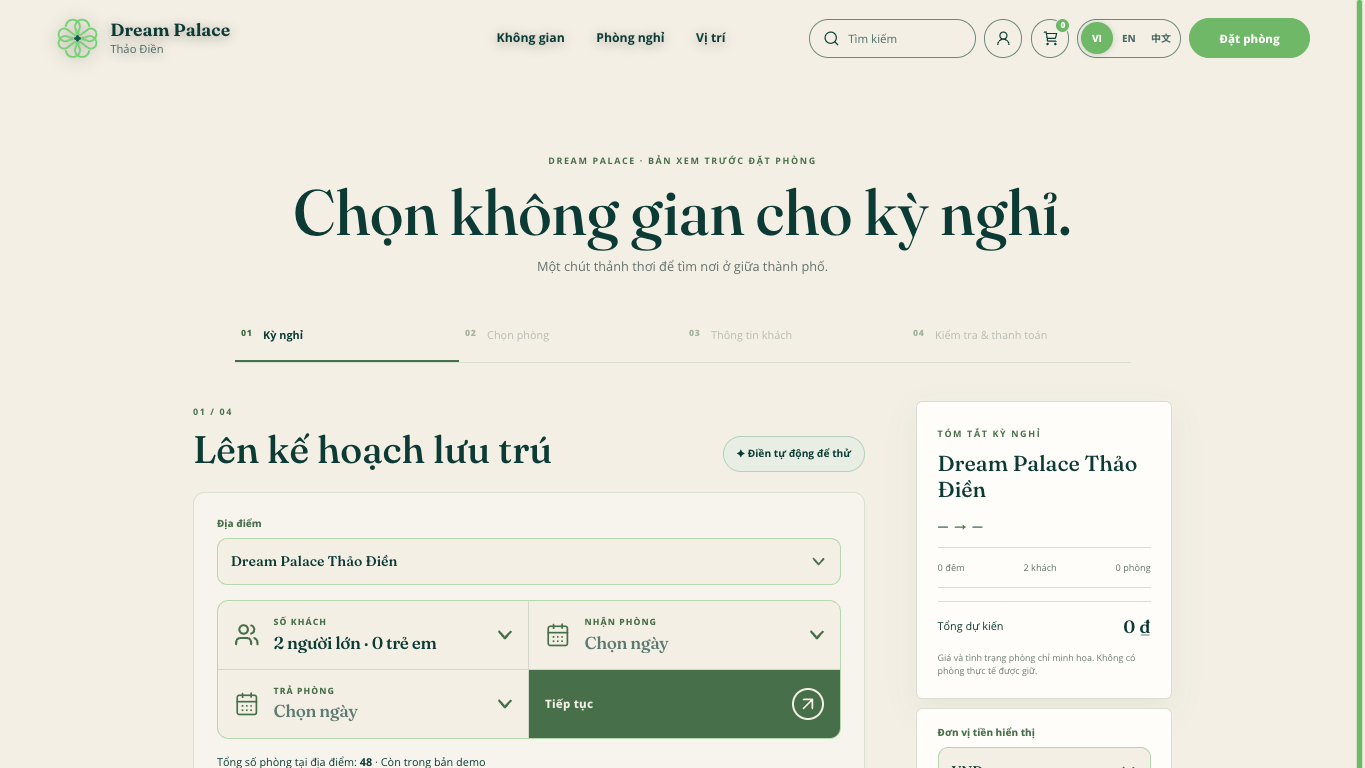
Inside the management platform
- RoomsThe room types and rooms at each property, with availability and status.
- GuestsGuest records and stays, from the booking request through check-in and check-out.
- EmployeesThe staff accounts and roles for both hotels.
What a guest books on the website and what the team sees in the back office come from the same place, so the front desk never works from a different picture than the guest did.
The result
The demo shows how Workless approaches hospitality: two distinct identities held together by one clear structure, and a management platform designed around the daily work of running both.
It carries the same decisions through every layer: a two-door entry, a consistent page structure, rooms described by how people live in them, locations described by walking distance, and an operating system organized around rooms, guests and staff.
How it came together
- RequirementsSettled before design: what makes each property different, what a guest must know to choose, and what the team must see to operate.
- ArchitectureThe structure of the choice became the structure of the site. The structure of the work became the structure of the back office.
- ExecutionWith the story and structure decided first, the build could focus on craft: light, tone and detail in three languages, and a back office that stays simple.